Reduced Excavation
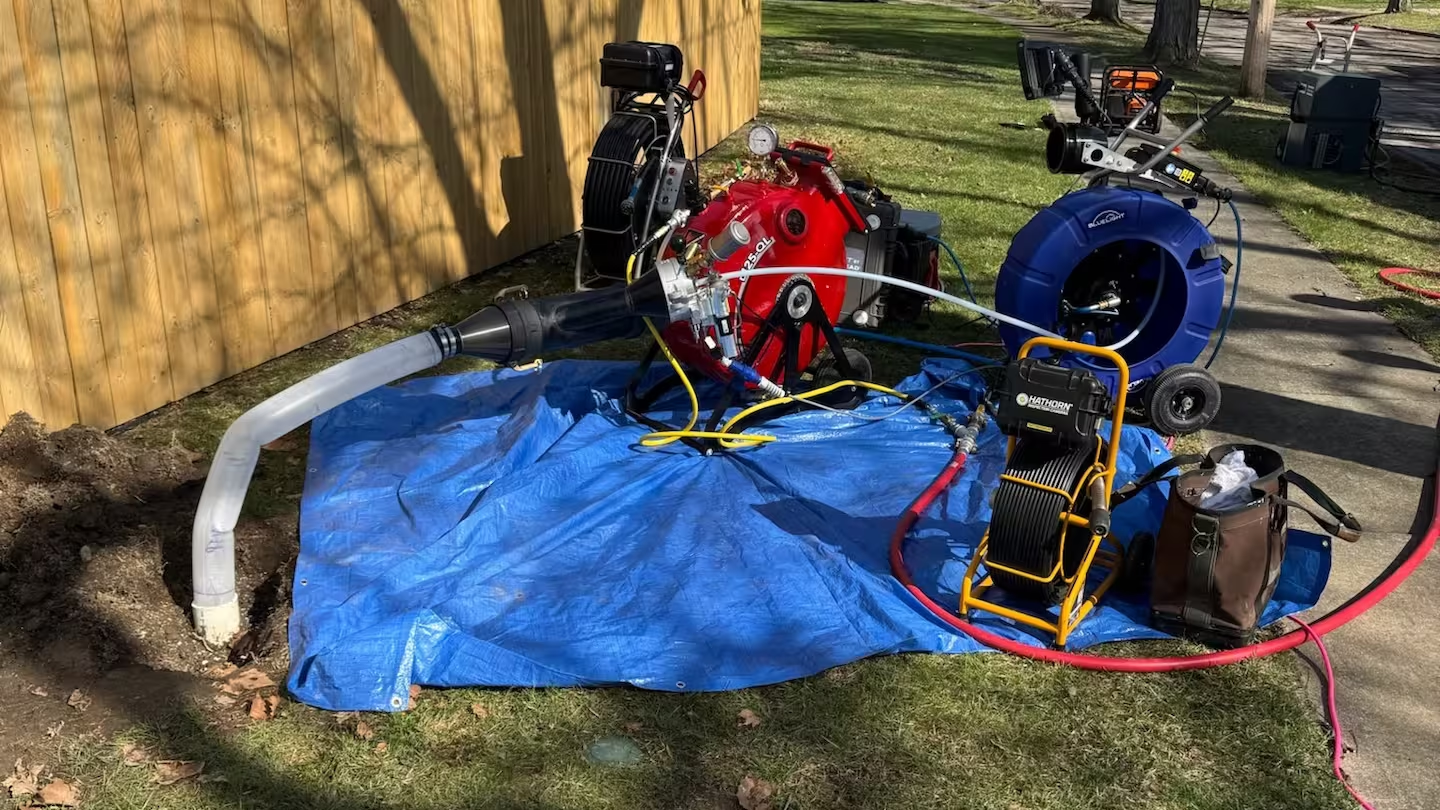
Limit surface opening to the access points reasonably required instead of excavating the full sewer route from end to end.
Velocity Master Plumbing provides professional trenchless sewer replacement for damaged, deteriorated, root-intruded, and failing sewer lines throughout Ann Arbor and Southeast Michigan.
Traditional sewer replacement often requires a long open trench across lawns, landscaping, driveways, sidewalks, and other finished areas. Trenchless sewer replacement provides another option by repairing or replacing qualifying underground sewer lines through limited access points.
Instead of excavating the entire pipe path, trenchless methods use the existing sewer route whenever conditions allow. Depending on the pipe structure, alignment, access, damage, and long-term repair goals, the existing line may be rehabilitated from within or replaced through controlled underground installation.
Velocity Master Plumbing combines sewer camera inspection, cleaning, trenchless rehabilitation, excavation experience, and underground plumbing knowledge to determine which solution is appropriate. The goal is not to force every property into the same method. It is to select the repair that addresses the actual sewer condition while limiting unnecessary disruption.
Trenchless sewer replacement is a modern underground repair method used to restore or replace damaged sewer piping without opening a continuous trench across the entire sewer route.
Access is created only where required by the selected repair method. Depending on the project, this may involve one or more targeted access points near the home, property line, connection, cleanout, or another strategic location.
Inspection findings help determine whether the existing pipe can be rehabilitated internally with cured-in-place pipe lining or whether a replacement method such as pipe bursting is better suited to the damage and system conditions.
Limit surface opening to the access points reasonably required instead of excavating the full sewer route from end to end.
Use the established underground sewer path when pipe alignment, access, damage, and surrounding conditions support the selected method.
Create a new structural pipe within the existing line or install replacement piping along the original sewer route.
Reduced excavation can decrease the amount of backfilling, landscape restoration, concrete work, and surface reconstruction required.
Use sewer inspection footage to evaluate pipe material, roots, cracking, alignment, collapse, deterioration, and other visible conditions.
Select lining, bursting, excavation, or a combined approach according to the system rather than applying one solution to every sewer problem.
The phrase trenchless sewer replacement can include different underground repair technologies. The appropriate method depends on pipe condition, structural integrity, alignment, diameter, access, repair length, connection requirements, and the specific goal of the project.
A resin-saturated liner is inserted into a prepared host pipe and cured in place, forming a smooth, seamless pipe structure within the original sewer line.
A bursting head is pulled through the existing line while a new replacement pipe follows behind it. The old pipe is displaced outward as the new pipe is installed.
A single clog does not automatically mean a sewer line needs replacement. Repeated symptoms, visible structural damage, aging pipe materials, and recurring failures are stronger indicators that the underground system should be evaluated more closely.
Backups that return after cleaning may indicate roots, structural damage, deterioration, deformation, alignment problems, or recurring obstructions.
Slow drainage affecting multiple fixtures may point to a restriction or failure within a shared building drain or underground sewer line.
Roots entering through cracked pipe, separated joints, offsets, and damaged connections may continue returning after temporary cutting or cleaning.
Aging clay, cast iron, Orangeburg, and other pipe materials may develop cracking, corrosion, deformation, loss of structure, or widespread deterioration.
Persistent odors, gurgling, recurring backups, and changing drain performance may indicate a larger underground drainage problem.
Repeated spot repairs or cleaning may provide diminishing value when widespread pipe deterioration continues affecting the sewer system.
Every project is planned around the actual pipe condition, property layout, access, repair method, municipal requirements, utility location, and long-term performance goals.
Camera inspection helps identify pipe material, roots, cracks, offsets, collapse, deterioration, obstructions, and other visible system conditions.
Qualifying debris, buildup, roots, and obstructions are addressed so the pipe can be evaluated and prepared for the selected trenchless method.
CIPP lining, pipe bursting, or another approved repair approach is completed using the access points and equipment required by the project.
The repaired or replaced sewer system is reviewed, required inspections are coordinated, and important project information is explained to the customer.
The primary advantage of trenchless sewer replacement is the ability to perform substantial underground repair while preserving more of the property above the pipe. The exact benefit depends on repair type, access, site conditions, pipe alignment, surrounding utilities, and the amount of excavation required.
Reduced excavation can help limit disturbance to lawns, trees, planting areas, landscape features, and established outdoor spaces.
Trenchless access may reduce the need to remove long sections of driveway, sidewalk, patio, concrete, or other finished surfaces.
Smaller excavation areas can decrease the amount of grading, backfilling, surface reconstruction, and landscape restoration required.
Modern pipe materials and installation methods are designed to provide dependable long-term performance when properly selected and installed.
Trenchless sewer replacement may be appropriate when an underground line has widespread damage or deterioration but the route and surrounding conditions still support access through reduced-dig methods.
Pipe lining may be considered when the host pipe remains sufficiently open and structurally suitable for rehabilitation. Pipe bursting may be considered when replacement is needed and the route, access, soil, utilities, and surrounding conditions support installation of a new pipe.
Trenchless methods solve many underground sewer problems, but direct excavation remains necessary for certain structural and site conditions. A severely collapsed line may prevent equipment or materials from passing through. Major offsets, improper slope, failed connections, inaccessible damage, and certain utility conflicts may also require direct access.
Many trenchless projects can be completed more efficiently than traditional dig-and-replace work because less excavation and surface restoration are required. Some residential projects may be completed within one or several working days, while larger or more complex systems may require additional time.
Project duration depends on sewer length, depth, material, access, cleaning requirements, repair method, municipal inspections, utility conditions, weather, site constraints, connection work, and whether excavation is needed at specific locations.
Velocity provides trenchless sewer replacement throughout Ann Arbor, Brighton, Chelsea, Dexter, Lansing, Manchester, Saline, Ypsilanti, and surrounding Southeast Michigan communities.
Local properties include historic homes with clay and cast-iron sewer piping, neighborhoods with Orangeburg lines, newer residential systems, rental properties, commercial buildings, and sites where preserving landscaping, driveways, sidewalks, or other finished areas is an important repair goal.
Explore Service AreasTrenchless recommendations depend on sewer material, structural condition, alignment, access, depth, damage severity, cleaning requirements, soil, utilities, property layout, and the selected repair method.
Trenchless sewer replacement is a modern underground repair method that restores or replaces qualifying damaged sewer lines without excavating a continuous trench across the entire pipe route. CIPP lining forms a new pipe structure within the existing line, while pipe bursting installs new replacement piping through targeted access points.
Pipe bursting uses a specialized bursting head that is pulled through the existing sewer line. As the old pipe is displaced outward into the surrounding soil, a new replacement pipe is pulled into place along the same route. Entry and exit access points are typically required.
Yes. Trenchless replacement generally requires substantially less excavation because the full sewer route does not need to be opened. This can help preserve more landscaping, lawn, driveway, sidewalk, patio, and other finished areas while reducing the amount of restoration required after installation.
Trenchless sewer replacement may be recommended when a sewer line has widespread cracking, root intrusion, deterioration, recurring failures, aging pipe material, or other structural conditions requiring long-term rehabilitation. Sewer camera inspection, pipe access, alignment, depth, material, damage severity, and property conditions are evaluated before selecting a repair method.
Many residential trenchless sewer projects can be completed more quickly than traditional excavation because less surface opening and restoration are required. Timing depends on line length, depth, cleaning needs, repair method, access, municipal requirements, utility conditions, weather, connections, and project complexity.
No. Trenchless methods work for many sewer systems, but fully collapsed piping, severe misalignment, improper slope, inaccessible damage, failed connections, utility conflicts, or other structural conditions may require targeted excavation. A professional inspection is needed to determine whether CIPP lining, pipe bursting, excavation, or a combined approach is appropriate.
Tell us about recurring backups, root intrusion, aging pipe materials, prior repair history, sewer odors, or inspection findings. Velocity will evaluate the accessible sewer system, explain the available trenchless and excavation options, and recommend a practical repair approach based on the condition of the property.